Why Does Your Car Battery Keep Dying? Causes & Fixes

admin
September 7, 2026
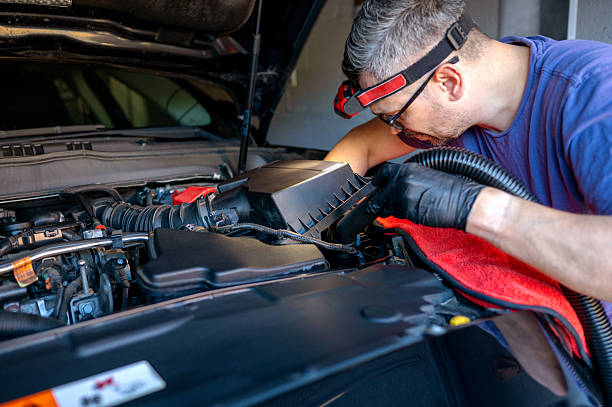
Your engine needs clean air to run properly. Every time you drive, your vehicle pulls air into the engine, and the engine air filter helps keep dust, dirt, pollen, insects, and other debris from entering the intake system. Over time, that filter becomes dirty and restricted, which is why air filter replacement is an important part of routine vehicle maintenance.
A clogged filter does not always cause an obvious problem right away. In many cases, the first signs can be subtle: slightly weaker acceleration, reduced fuel economy, or an engine that does not feel as responsive as it normally does.
So how often should you replace an engine air filter? What does replacement cost? And how can you tell whether the filter actually needs to be changed?
This guide explains the common warning signs, recommended replacement intervals, costs, and what to expect during professional service.
The engine air filter is designed to clean the air entering the engine. It catches contaminants before they can travel through the intake system and reach the engine.
Clean air is important because the engine needs the correct mixture of air and fuel for efficient combustion. If the filter becomes heavily clogged, airflow can become restricted.
A typical engine air filter helps protect the engine from:
The filter is usually located inside an air filter housing connected to the engine’s intake system. Its exact location varies by vehicle.
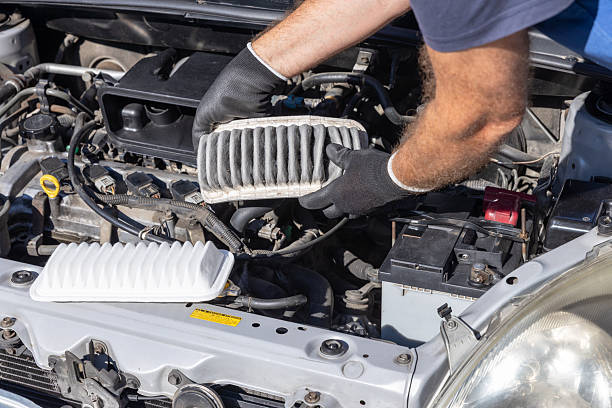
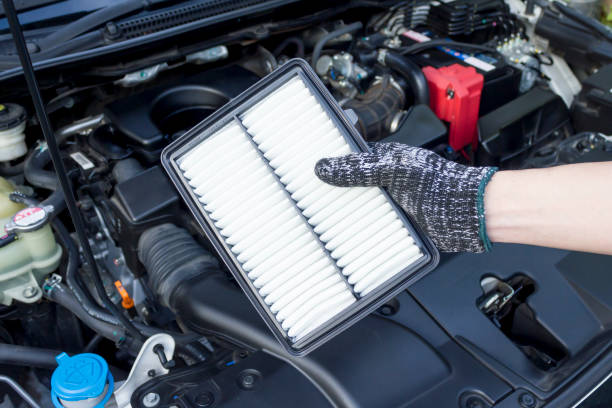
There is no single replacement interval that works for every vehicle.
Many manufacturers provide a recommended inspection or replacement interval in the owner’s manual. Depending on the vehicle, driving conditions, and filter design, replacement may be recommended at a specific mileage or service interval.
However, mileage is not the only factor.
A vehicle driven mostly on clean highways may keep its filter in better condition than a vehicle regularly driven on dusty roads, construction routes, or heavily polluted areas.
Your driving environment matters.
You may need more frequent inspection or air filter replacement if you regularly drive:
If you live and drive around Baltimore, seasonal conditions, traffic, road construction, and your individual driving habits can all affect how quickly an engine air filter becomes dirty.
A dirty filter does not always produce one obvious warning. Instead, you may notice several small changes in how your vehicle performs.
If your vehicle is using more fuel than usual, several different problems could be responsible. A restricted air filter can be one possible cause, although fuel economy can also be affected by tire pressure, driving habits, engine condition, sensors, and other factors.
A dirty filter should therefore be inspected rather than automatically blamed for poor mileage.
Does your vehicle feel less responsive when you press the accelerator?
Restricted airflow can affect engine performance. If the filter is heavily contaminated, replacing it may help restore proper airflow.
However, slow acceleration can also indicate problems with the fuel system, ignition system, transmission, or other engine components. Proper diagnosis is important if the issue continues after maintenance.
A vehicle that does not feel as smooth or responsive as usual deserves attention.
When airflow is restricted, the engine may not receive the amount of air it needs for normal operation. If the filter looks excessively dirty, air filter replacement may be part of the solution.
Changes in engine sound should not automatically be attributed to the air filter.
If you hear unusual whistling, sucking, rattling, or other sounds from the intake area, the filter, air box, intake hose, or another component may need inspection.
A check engine light can be caused by many different problems. A dirty engine air filter is not automatically the reason the light appears.
If the warning light comes on, a proper diagnostic check can help identify the actual cause.
Avoid replacing random parts based solely on the warning light. Diagnostic testing is a better approach.
Sometimes the simplest sign is a physical inspection.
Remove or inspect the filter according to the manufacturer’s procedure. If it is heavily covered with dirt, dust, leaves, or other debris, it may be time for replacement.
A damaged, collapsed, wet, or improperly fitted filter should also be addressed.
If the engine feels rough at idle or during acceleration, several issues could be involved.
A restricted intake can contribute to performance concerns, but rough running may also come from spark plugs, ignition coils, fuel injectors, vacuum leaks, sensors, or other problems.
That is why a professional inspection is useful when symptoms persist.
A noticeable delay or lack of response when pressing the accelerator can have several causes.
A dirty filter can restrict incoming air, but throttle body problems, electronic controls, sensors, and other engine issues may produce similar symptoms.
If replacing the filter does not resolve the problem, additional diagnosis may be necessary.
You do not always have to wait for symptoms.
Preventive maintenance is often the simplest approach. If your vehicle’s manufacturer recommends inspecting or replacing the filter at a particular mileage or interval, following that schedule can help keep maintenance predictable.
The cost of air filter replacement is usually influenced by the vehicle, filter type, labor rate, and whether additional inspection or maintenance is performed at the same time.
For many vehicles, an engine air filter is relatively inexpensive compared with larger automotive repairs. However, prices vary significantly between makes and models.
Factors that can affect the total cost include:
A professional shop can inspect the existing filter and provide an accurate estimate before replacing it.
An engine air filter is often one of the more straightforward maintenance components to access, but that does not mean every vehicle has the same setup.
If you know the correct filter for your vehicle and can safely follow the manufacturer’s instructions, replacement may be manageable for some drivers.
However, professional service can be worthwhile if:
The biggest mistake is installing the wrong filter or fitting it incorrectly.
A typical service is straightforward.
The technician checks the filter’s condition and determines whether replacement is appropriate.
The housing and surrounding area may be checked for excessive dirt, debris, moisture, or damage.
The replacement filter should match the vehicle’s specifications and fit correctly inside the housing.
The housing should be properly closed and secured so that unfiltered air does not bypass the filter.
Depending on the service and vehicle, the technician may verify that the engine is operating normally after the filter has been installed.
This process is simple, but correct installation matters. A filter that is not seated properly can allow contaminants to bypass the filtration system.
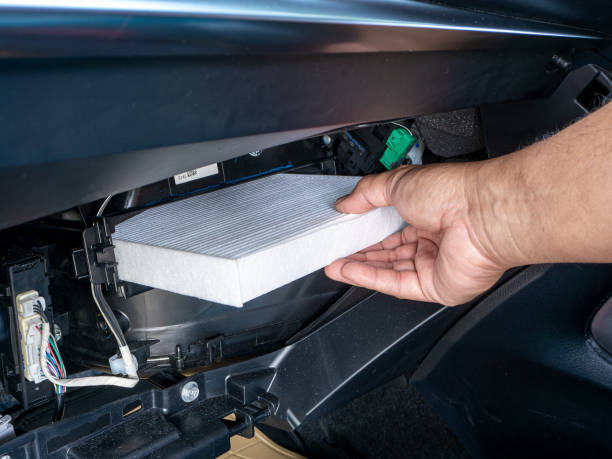
One common source of confusion is the difference between the engine air filter and the cabin air filter.
They perform different jobs.
Engine air filter: Protects the engine by filtering air entering the engine intake.
Cabin air filter: Filters air entering the passenger compartment through the vehicle’s HVAC system.
A dirty cabin filter may affect airflow from the vents, while a dirty engine filter concerns the air entering the engine.
Your vehicle may need both filters inspected at different intervals.
A severely neglected filter can contribute to poor airflow and allow problems if it is damaged, improperly fitted, or bypassed.
The filter’s primary purpose is to keep contaminants out of the engine intake system. Maintaining the filtration system is therefore part of protecting the engine.
However, not every engine problem is caused by a dirty filter. If your vehicle has persistent performance issues, proper diagnosis is more useful than repeatedly replacing maintenance parts.
This depends on the type of filter.
Many standard disposable engine air filters are designed to be replaced rather than washed or cleaned. Trying to clean a disposable filter incorrectly can damage the filter material.
Some specialty reusable filters have different maintenance requirements and should be serviced according to the manufacturer’s instructions.
Always follow the filter manufacturer’s and vehicle manufacturer’s recommendations.
Ignoring a heavily dirty filter may contribute to restricted airflow and reduced engine performance.
You may also end up with an inexpensive maintenance item becoming part of a larger diagnostic problem if other symptoms are ignored.
That does not mean every dirty filter will immediately cause major engine damage. The condition of the filter matters, as does the vehicle’s overall maintenance history.
Regular inspection is a simple way to know what condition the filter is actually in.
Good vehicle maintenance is not only about fixing problems after they happen. It is also about keeping an eye on components that gradually wear out or become contaminated.
During routine service, a technician may inspect the engine air filter along with other maintenance items such as:
Combining inspections with scheduled maintenance can make it easier to keep track of your vehicle’s condition.
If you are unsure whether the filter needs to be replaced, having it inspected is a simple first step.
You should especially consider an inspection if:
A technician can inspect the filter and determine whether replacement is actually necessary.
An engine air filter is a small component, but it has an important job. Keeping it in good condition helps maintain proper airflow and supports normal engine operation.
The best approach to air filter replacement is not to rely on one universal mileage number. Follow your vehicle manufacturer’s maintenance recommendations, consider your driving conditions, and have the filter inspected when you notice changes in performance or when its service interval is approaching.
If your vehicle needs routine maintenance or you are experiencing changes in engine performance, a professional inspection can help determine whether the air filter is actually the problem or whether another component needs attention.
For Baltimore drivers, Roland Falls Auto & Body Repairs can help with routine automotive maintenance, inspections, and repair needs so you can stay ahead of avoidable vehicle problems.
Whether you need collision repair, auto body work, routine maintenance, window tinting, detailing, or tag and title services, our team is here to help. Contact Roland Falls Auto & Body Repairs today to schedule a service, request an estimate, or ask any questions about your vehicle.
Join our list for quick updates, exclusive offers, and important alerts.