Why Does Your Car Battery Keep Dying? Causes & Fixes

admin
October 27, 2026

You’re ready to leave for work, turn the key or press the start button, and nothing happens. Maybe you hear a clicking sound. Maybe the engine turns over but refuses to start.
When your car won’t start, it’s easy to assume the battery is dead. But several different problems can cause the same frustrating situation.
For Baltimore drivers, starting trouble can become more noticeable as temperatures drop in late fall and winter. Cold weather can expose an aging battery or make an existing mechanical problem harder to ignore.
The good news? The sounds and symptoms your vehicle makes can provide useful clues.
In this guide, we’ll explain seven common reasons a car won’t start, what you can safely check, and when it’s time to contact an auto repair professional.
A vehicle needs several systems to work together before the engine can run. These include the battery, starter motor, fuel delivery system, ignition system, and electronic controls.
If one of these systems fails, your car won’t start even if everything seemed normal during your previous drive.
The first step is understanding what happens when you try to start the engine.
Does it click? Does it crank slowly? Does the engine turn over normally without starting?
Those details can help narrow down the possibilities.
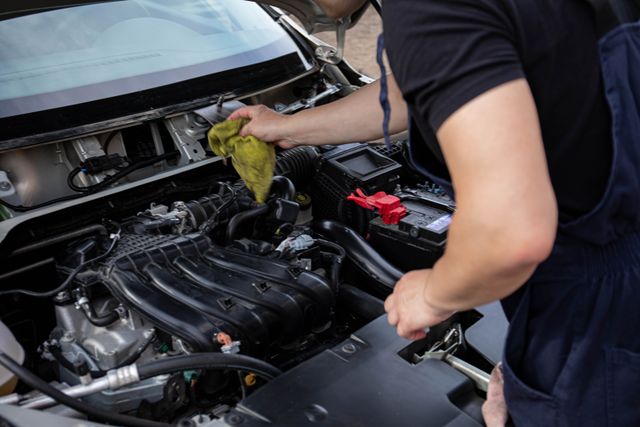
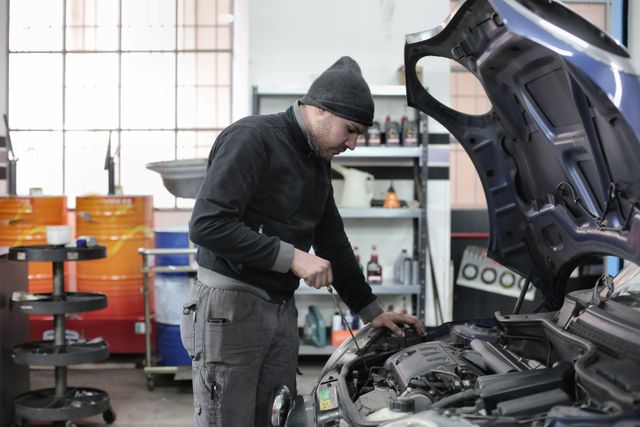
A weak battery is one of the most common reasons a car won’t start, especially during colder weather.
Your battery supplies the electrical power needed to operate the starter motor and other systems during engine startup.
As batteries age, their ability to provide starting power can decrease. Cold temperatures can make that weakness more noticeable.
The engine cranks slowly.
You hear rapid clicking when trying to start.
Dashboard lights appear dim.
The car starts after a jump-start but struggles again later.
Electrical accessories behave unusually.
A battery problem isn’t always caused by the battery itself. Loose connections, corrosion, or a charging-system fault can produce similar symptoms.
What to do: Have the battery, terminals, and charging system checked before replacing parts.
The starter motor turns the engine so combustion can begin.
If the starter fails, you may hear a single click when turning the key, but the engine doesn’t crank.
Some vehicles develop intermittent starting problems before the starter stops working completely.
A single click without engine cranking
Intermittent no-start problems
Dashboard lights working while the engine won’t turn over
Unusual grinding noises during starting
If your car won’t start but the headlights and dashboard appear normal, the starter system may be worth investigating.
However, a single click doesn’t automatically prove the starter is bad. Battery connections, relays, and electrical faults can create similar symptoms.
Professional testing helps avoid replacing the wrong component.
Your alternator helps supply electrical power and recharge the battery while the engine is running.
If the charging system isn’t working properly, the battery may gradually lose power.
Eventually, you may find that your car won’t start after being parked.
A battery warning light while driving
Headlights that dim or fluctuate
Electrical accessories behaving unpredictably
Repeated dead-battery problems
A jump-start may temporarily get the engine running, but it won’t fix a faulty charging system.
If the battery keeps losing charge, a technician can test the alternator and related components.
Sometimes the engine cranks at a normal speed but never starts.
That may mean the starter and battery are doing their jobs, but the engine isn’t receiving the fuel it needs.
Possible causes include a failing fuel pump, fuel-system electrical problems, or restricted fuel delivery.
The engine cranks but doesn’t fire up.
Starting problems happen intermittently.
The vehicle previously hesitated or lost power.
The engine stalled before the no-start problem began.
If your car won’t start despite normal cranking, the fuel system is one of several areas that may need testing.
Avoid repeatedly trying to start the engine for long periods. Follow your owner’s manual guidance, and arrange an inspection if the problem continues.
Gasoline engines need a properly timed spark to ignite the air-fuel mixture.
Worn spark plugs, faulty ignition coils, or electrical issues can interfere with that process.
These problems may first appear as rough idling, hesitation, or engine misfires.
Over time, a serious ignition problem may prevent the engine from starting.
Rough engine operation
Misfiring or hesitation
Reduced acceleration
Difficulty starting
An illuminated check engine light
Not every ignition problem causes a complete no-start condition, but these symptoms are worth investigating.
If your car won’t start and previously showed signs of misfiring, share that information with your mechanic.
Sometimes the problem isn’t an expensive component.
Corrosion around battery terminals or a loose electrical connection can interrupt the power needed to start your vehicle.
Moisture, age, and normal wear can affect electrical connections over time.
Starting works sometimes but not others.
Lights flicker when you try to start.
Visible corrosion appears around battery terminals.
Electrical power cuts in and out.
If your car won’t start, a technician may begin by checking the battery connections and cables.
Don’t attempt to handle damaged battery cables or leaking batteries yourself. Battery systems can present electrical and chemical hazards.
Modern vehicles rely on sensors and computer-controlled systems to start and run properly.
A faulty crankshaft position sensor, immobilizer issue, or another electronic fault may prevent the engine from starting.
For example, an anti-theft system may block starting if it doesn’t recognize the vehicle’s key.
Other electronic problems may allow the engine to crank but prevent it from running.
These faults can be difficult to identify based on symptoms alone.
If your car won’t start and the battery tests good, computerized diagnostics may help identify the underlying issue.
The sound your vehicle makes can provide useful information, although it can’t confirm the cause by itself.
| What You Hear | Possible Explanation |
|---|---|
| Rapid clicking | Weak battery or poor electrical connection |
| One click, no cranking | Starter circuit, starter motor, or battery connection issue |
| Slow cranking | Weak battery, connection problem, or increased engine resistance |
| Normal cranking, no start | Fuel, ignition, sensor, or engine-management issue |
| No sound at all | Battery connection, starter control, security system, or electrical fault |
If your car won’t start, pay attention to the sound and whether dashboard lights remain on. These observations can help your repair technician diagnose the problem.
Baltimore experiences changing temperatures throughout fall and winter.
Cold conditions can reduce the available starting power of a battery. At the same time, an engine may require more effort to turn over.
That combination can reveal a battery that was already getting weak.
However, winter weather isn’t the only reason a car won’t start. A worn starter, charging-system issue, or electrical fault can happen at any time of year.
If you’ve noticed slower starts during recent mornings, consider scheduling an inspection before the problem leaves you stranded.
For additional seasonal preparation, read our Winter Car Maintenance in Baltimore guide.
Before assuming the worst, take a moment to check a few basic things.
First, make sure the vehicle is in Park or Neutral, as appropriate for your transmission, and that you’re following the correct starting procedure.
If your vehicle uses a push-button start, check whether the dashboard displays a key or security-system warning.
Next, observe whether the dashboard lights turn on and what happens when you attempt to start the engine.
If the battery appears weak, a jump-start may help in some situations. However, jump-starting must follow the vehicle manufacturer’s instructions, especially for hybrids, electric vehicles, and vehicles with designated jump terminals.
Never attempt a jump-start if the battery is visibly damaged, leaking, or frozen.
If the engine starts but immediately stalls, or the problem returns repeatedly, arrange a professional inspection.
If your vehicle is parked in an unsafe location, prioritize your safety and contact roadside assistance.
You should consider professional diagnostics when:
The engine repeatedly fails to start.
Jump-starting doesn’t solve the problem.
The battery keeps going dead.
You hear grinding or unusual starting noises.
The vehicle stalls unexpectedly.
Warning lights appear alongside starting problems.
A proper diagnosis can help distinguish between a weak battery, starter fault, charging issue, and other mechanical or electrical problems.
Instead of guessing which part to replace, identifying the cause first can help you make a more informed repair decision.
A vehicle that refuses to start can disrupt your entire day.
At Roland Falls Auto & Body Repairs, we help Baltimore drivers with automotive diagnostics, engine concerns, and mechanical repair services.
Whether you’re dealing with slow cranking, unusual starting noises, or a recurring no-start problem, our team can help you discuss the symptoms and appropriate next steps.
Explore our engine repair services in Baltimore and automotive repair services to learn more.
If your car won’t start, contact Roland Falls Auto & Body Repairs to ask about diagnostic service and appointment availability.
Roland Falls Auto & Body Repairs
Address: 1100 W 41st St, Baltimore, MD 21211, United States
Phone: +1 410-889-6536
Email: rolandfallsauto@gmail.com
Website: https://rolandfalls.com/
Find answers to common car starting problems and learn when to seek professional auto repair in Baltimore, MD.
The battery may have enough power for the lights but not enough to crank the engine. A faulty starter, poor electrical connection, or starter-control issue could also be responsible.
Rapid clicking often points to insufficient electrical power or a connection problem. A single click can indicate a starter-circuit issue, but proper testing is needed to confirm the cause.
Yes. Cold temperatures can reduce battery performance and make an existing starting problem more noticeable. A weak battery is a common cause, but other mechanical and electrical faults are possible.
Possible reasons include a weak battery, an electrical drain, a charging-system problem, or another starting-system fault. If the problem happens repeatedly, have the vehicle inspected.
Yes. If the alternator isn't charging the battery properly, the battery may eventually lose enough power that it cannot start the engine.
Not automatically. Battery testing and a charging-system inspection can help determine whether the battery needs replacement or another component is responsible.
Roland Falls Auto & Body Repairs is located at 1100 W 41st St, Baltimore, MD 21211. Call +1 410-889-6536 to discuss your vehicle's symptoms and available diagnostic services.
Whether you need collision repair, auto body work, routine maintenance, window tinting, detailing, or tag and title services, our team is here to help. Contact Roland Falls Auto & Body Repairs today to schedule a service, request an estimate, or ask any questions about your vehicle.
Join our list for quick updates, exclusive offers, and important alerts.